Space for rent!!

What America Getting to 1 Million Bitcoin Looks Like
An analysis of what US Strategic Bitcoin Reserve acquisition might look like. Both original 20 year and accelerated 4 year scenarios considered.
gensey0
3/7/20254 min read
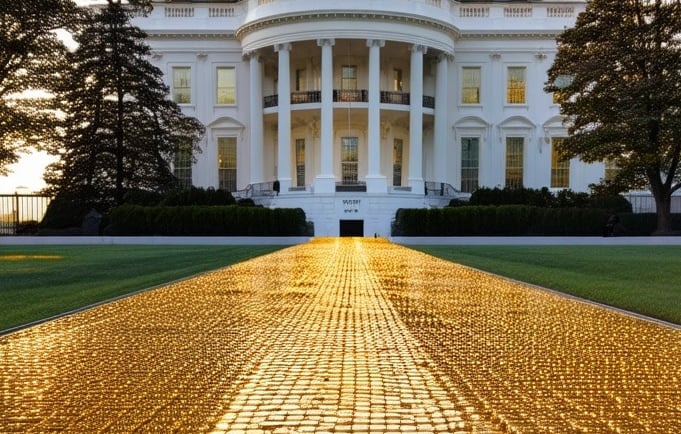
In recent months, the idea of the United States government acquiring a massive reserve of Bitcoin has gained significant traction. Under the proposed BITCOIN Act , the U.S. would aim to hoard 1 million bitcoins over the course of 20 years, with the goal of owning roughly 5% of the total supply.
While this ambitious plan is still hypothetical, it raises intriguing questions about how such an acquisition could unfold and what it might mean for both the cryptocurrency market and the global economy.
The Current State of Bitcoin Ownership by the U.S.
To understand what it would take for the U.S. to amass 1 million Bitcoin, we first need to consider how many BTC the government currently holds—if any at all. As of now, there is no official confirmation that the U.S. government owns any Bitcoin. However, given the increasing institutional adoption of cryptocurrencies, it’s plausible that federal agencies like the Federal Reserve or Treasury Department may already hold some amount of BTC in undisclosed reserves.
For argument's sake, let’s assume the U.S. starts from scratch with zero Bitcoin holdings. This means they would need to acquire all 1 million BTC from scratch—a monumental task considering the finite nature of Bitcoin's supply (capped at 21 million) and its current valuation.
How Much Would 1 Million Bitcoin Cost?
As of today, March 7, 2025, one million bitcoins is valued at approximately $90.2 billion USD , based on the exchange rate provided by currency converters.
To put this into perspective, the current price of one Bitcoin hovers around $89,837 USD , according to Coinbase data.
This staggering figure underscores just how costly—and potentially impactful—such a move would be. For context, $90 billion represents nearly half of the annual defense budget of the United States. Acquiring this much Bitcoin would not only require substantial financial resources but also careful planning to avoid disrupting the market.
Breaking Down the Timeline: Daily Purchases Needed
If the U.S. aims to reach 1 million Bitcoin within 20 years, as outlined in the BITCOIN Act, the timeline becomes slightly more manageable—but still challenging. Let’s break down the numbers:
Total Target: 1,000,000 BTC
Timeframe: 20 years = 7,300 days
Dividing these figures gives us a daily target of approximately 137 BTC per day . At today’s prices, this equates to roughly $12.3 million USD per day.
However, if the goal were accelerated to align with the end of Donald Trump's potential second term (assuming he runs again and serves until January 20, 2029), the timeframe shrinks dramatically. Here’s the revised calculation:
Total Target: 1,000,000 BTC
Timeframe: ~4 years (from now until January 2029) = 1,460 days
This results in a daily purchase requirement of approximately 685 BTC per day , costing roughly $61.5 million USD per day.
Such aggressive buying would almost certainly drive up Bitcoin’s price due to increased demand, making the endeavor even more expensive over time.
Market Implications of Large-Scale Government Buying
The prospect of the U.S. government entering the Bitcoin market on such a large scale has profound implications for liquidity, volatility, and investor sentiment. Currently, Bitcoin’s market capitalization stands at $1.75 trillion USD , meaning the acquisition of 1 million BTC would represent about 5% of the entire market cap.
Such a move could lead to several outcomes:
Price Surge: With the U.S. purchasing hundreds of millions of dollars’ worth of Bitcoin daily, prices are likely to skyrocket. This could create a feedback loop where rising prices attract more retail and institutional investors, further inflating the bubble.
Liquidity Concerns: Despite its high market cap, Bitcoin remains relatively illiquid compared to traditional assets like gold or stocks. A sudden influx of buy orders from the U.S. government could strain the available supply, leading to slippage and erratic price movements.
Global Reaction: Other nations might view this accumulation as a threat to their own economic sovereignty, prompting retaliatory measures such as imposing stricter regulations on crypto trading or even launching competing digital currencies.
Public Perception Shift: If the U.S. government openly embraces Bitcoin, it could legitimize the asset class in the eyes of skeptics while simultaneously raising concerns about centralized control over a decentralized network.
Speculation on Motivations Behind the BITCOIN Act
Why would the U.S. pursue such an ambitious strategy? Proponents argue that holding a significant portion of Bitcoin could bolster America’s technological competitiveness and position it as a leader in the emerging field of blockchain innovation.
Additionally, having a strategic reserve of Bitcoin could serve as a hedge against inflation or geopolitical instability, similar to how countries stockpile gold. Critics, however, warn that this approach risks undermining Bitcoin’s core principles of decentralization and censorship resistance. By concentrating ownership in the hands of a single entity, the U.S. could inadvertently transform Bitcoin into another tool of state power rather than a democratizing force.
Conclusion: A Bold Experiment with Uncertain Outcomes
The notion of the United States acquiring 1 million Bitcoin is undeniably bold—and fraught with challenges. Whether achieved over 20 years or compressed into a shorter timeframe, the sheer scale of this operation would reshape the cryptocurrency landscape in ways we can only begin to imagine.
While the exact motivations behind the BITCOIN Act remain speculative, one thing is clear: Should this plan come to fruition, it will mark a pivotal moment in the history of finance—one where the world’s largest economy places its bet on the future of money
Only time will tell whether this gamble pays off—or sets the stage for unintended consequences that ripple across the globe.